9 Unhinged Pet Videos That Made Scientists Lose Their Minds (In a Good Way)
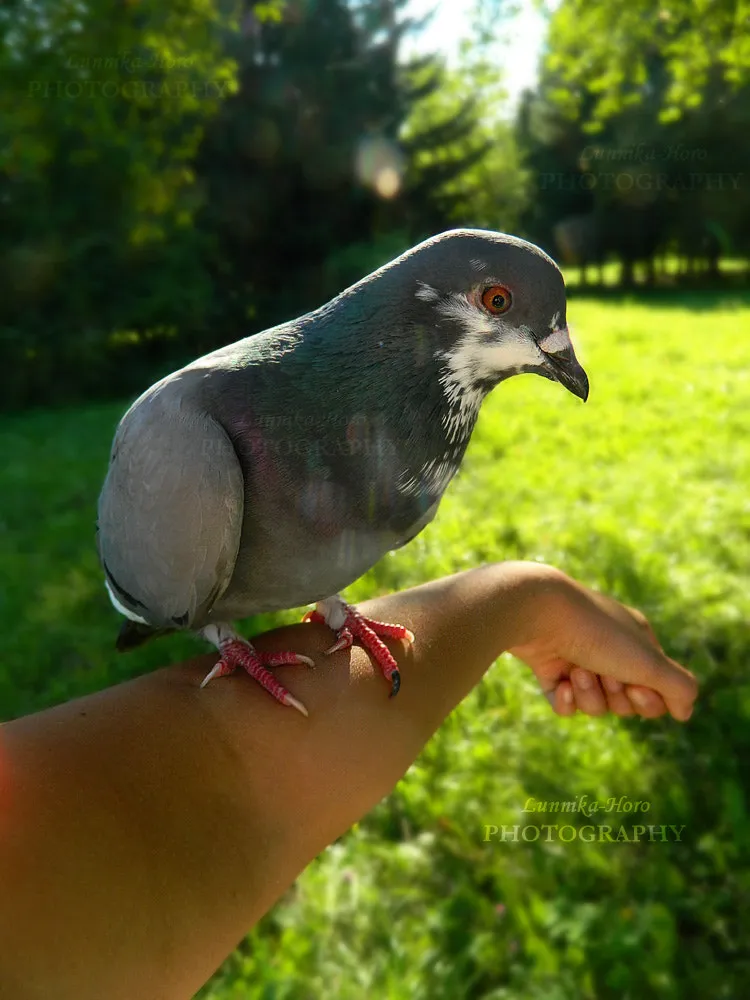
Photo: Lunnika Horo, CC BY-SA 3.0, via Wikimedia Commons
Science, as a general enterprise, prides itself on dignity. Lab coats. Controlled variables. Carefully worded abstracts that take forty minutes to say something a normal person could explain in one sentence. It is, by design, a serious business.
And then a golden retriever does something physically impossible on TikTok and a marine biologist in San Diego almost chokes on her coffee.
Welcome to the golden age of accidental zoology, where the peer-reviewed journal and the For You Page have formed an unlikely partnership. Here at Qoopie, we've rounded up nine viral pet moments that didn't just dominate group chats — they legitimately pushed the boundaries of what scientists understood about animal cognition, behavior, and biology. Buckle up, because things get wonderfully weird.
1. The Jar-Opening Octopus That Rewrote the Rulebook
Let's start with the one that started it all for a lot of people: the video of an octopus — filmed at a home aquarium — methodically unscrewing the lid of a glass jar to retrieve a crab inside. The clip spread like wildfire, racking up millions of views across platforms and inspiring roughly ten thousand "me trying to open a pickle jar" jokes.
But marine biologists were watching with considerably less humor and considerably more fascination. While researchers already knew octopuses were intelligent, the viral spread of these videos — there were dozens of variations, filmed by aquarium owners and marine park staff — created an unexpected crowdsourced dataset. Scientists at several institutions began cataloging the videos, noting variations in technique, speed, and problem-solving approach across different octopus species.
What emerged was compelling evidence that octopus tool-use behavior was far more widespread and individually variable than previously documented. Some animals used their suckers in a rotational grip. Others braced the jar against a surface. One particularly dramatic specimen in a Florida home aquarium appeared to study the jar for a full minute before attempting it — behavior that researchers described as consistent with planning-based cognition.
The jar videos directly influenced at least two published papers on cephalopod problem-solving. Not bad for content that mostly inspired seafood jokes.
2. The Cat That Couldn't Land on Its Feet (And Why That Mattered)
Every cat owner on earth will tell you that cats always land on their feet. It is, like gravity and the existence of Mondays, simply accepted as fact. So when a TikTok compilation of cats absolutely not landing on their feet went viral, it was funny for obvious reasons.
For biomechanics researchers, it was something else entirely.
The video compilation inadvertently documented a range of conditions — unusual surfaces, unexpected heights, elderly cats, cats recovering from minor injuries — under which the famous righting reflex failed or was delayed. Researchers studying vestibular function and motor control in mammals found the footage useful for identifying edge cases in a reflex that had, until then, been somewhat taken for granted as universal.
One researcher noted in an interview with a science publication that the sheer volume of crowd-filmed footage provided more varied real-world conditions than a controlled lab study could ethically replicate. "You can't exactly drop cats from various heights in a lab," she said. "But apparently the internet will do it by accident."
3. The Dog Who Recognized Himself in a Mirror (Maybe)
The mirror self-recognition test is a classic benchmark in animal cognition research — dogs, famously, tend to fail it. So when a TikTok video of a border collie apparently reacting to its own reflection in a way that looked suspiciously like self-recognition went massively viral, the comments section split cleanly between "aww" and "this changes everything."
Cognitive scientists were, predictably, more cautious — but genuinely intrigued. The video sparked renewed discussion about whether the standard mirror test was actually the right methodology for dogs, whose primary sense is olfactory rather than visual. Several researchers pointed to the viral clip as a useful prompt for redesigning self-recognition experiments for species whose cognition doesn't center on visual input.
A follow-up study using scent-based self-recognition tests — inspired in part by public interest generated by videos like this one — produced results suggesting dogs may have a form of self-awareness that the traditional mirror test simply wasn't equipped to detect. The border collie didn't prove anything on its own, but it kicked open a door.
4. The Parrot With an Inexplicable Vocabulary
A pet African grey parrot in Ohio went viral after its owner posted a video of the bird apparently using words in context — not just repeating phrases, but deploying vocabulary in response to specific situations in ways that seemed genuinely communicative. The bird asked for specific foods by name, commented on the weather, and, in one clip that got over eight million views, appeared to ask where the owner's spouse was when the spouse hadn't come home at the usual time.
Animal linguists and cognitive ornithologists were cautiously electrified. While African greys have long been studied for language-adjacent behavior — famously in the work of Dr. Irene Pepperberg — the volume of home-filmed footage showing contextual word use in non-research environments provided researchers with naturalistic behavioral data that lab conditions can struggle to replicate.
Several researchers reached out to the bird's owner directly. The parrot has since participated in informal observational studies.
5. The Fish That Kept Escaping Its Tank
A TikTok series following a pet betta fish that repeatedly, methodically escaped its tank — and was repeatedly found across the room, somehow still alive — became an unlikely gift for researchers studying fish cognition and environmental awareness.
Betta fish had been documented leaping from tanks before, but the serial, apparently intentional nature of this fish's escapes prompted questions about whether the behavior reflected goal-directed movement rather than random leaping. Ichthyologists noted that the fish consistently moved toward a second tank visible across the room, raising genuinely interesting questions about fish spatial awareness and visual goal-setting.
The video series generated enough academic interest that a researcher at a university aquatic biology program wrote a short commentary piece referencing it. It remains, to our knowledge, the only peer-adjacent document ever inspired by a fish with an apparent escape artist complex.
6, 7, 8, and 9: A Lightning Round of Chaotic Animal Genius
Because the internet never sleeps and neither, apparently, does animal science:
The crow that used a vending machine. A crow filmed apparently trading objects for food at an outdoor vending machine went viral and was subsequently cited in discussions about avian economic reasoning — the idea that corvids can conceptualize exchange value. Researchers noted it as naturalistic evidence supporting controlled lab findings about crow tool-and-trade behavior.
The dog that predicted seizures. A TikTok series documenting a pet dog's apparent ability to alert its owner to oncoming epileptic episodes generated enormous public interest and was credited by at least one medical alert dog training organization with increasing public awareness and research funding inquiries. Neurologists studying the olfactory markers of pre-seizure states found the videos useful for public education.
The hamster that built structurally sound architecture. A hamster filmed constructing a multi-chamber burrow system in a transparent enclosure went viral for being genuinely impressive, and was referenced in a zoology classroom at a Big Ten university as an example of instinctive engineering behavior that rivals the complexity of much larger mammals.
The cat that opened a childproof bottle. It took her eleven minutes. Researchers studying fine motor dexterity in domestic cats have asked us not to make further comments until their paper is published. We respect the process.
The Moral of the Story
Science didn't always live in laboratories. For most of human history, it lived in careful observation of the world as it actually was — messy, unpredictable, and full of animals doing things nobody expected. The internet, for all its chaos, has essentially handed researchers a planet-scale observation deck staffed by billions of amateur naturalists with smartphones.
Your pet's unhinged behavior might just be the data point that changes everything.
Film it. Post it. Tag it. And maybe — just maybe — a scientist somewhere will spill their coffee in the best possible way.