Nobody Texted You. You Checked Anyway. You'll Check Again in Four Minutes.
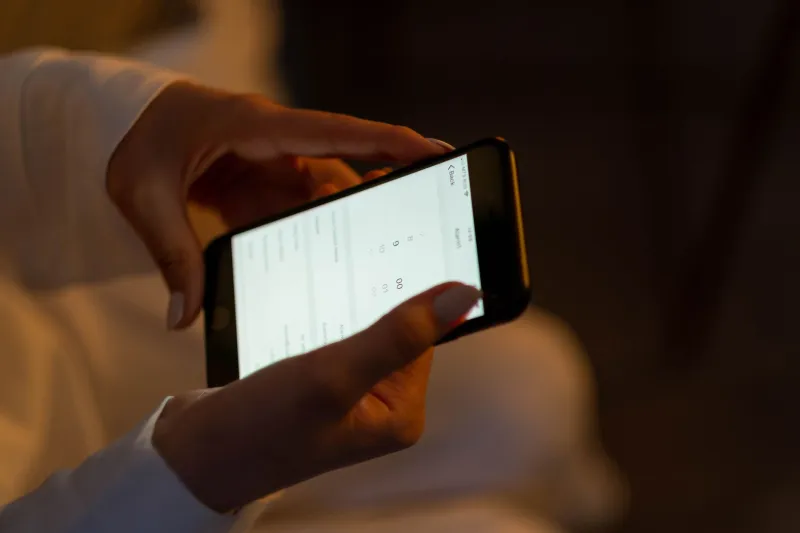
Here's a scenario so universal it should be stitched on a throw pillow: You're sitting on your couch. Your phone is face-down on the cushion next to you. Nothing is happening. Nobody is attempting to contact you. You know this. You checked 90 seconds ago.
You pick it up anyway.
Zero notifications. The screen is as empty as a movie theater on a Tuesday morning. You set it back down. You feel — and this is the part nobody talks about — slightly disappointed, even though you weren't expecting anything in the first place.
Welcome to the dopamine casino. There's no drink minimum, no dress code, and the house always wins.
Your Brain Thinks Your Phone Is a Slot Machine (Because It Is)
Psychologists have been saying this for years, but it bears repeating because apparently we all need to hear it a few hundred more times before it sinks in: the notification check is, neurologically speaking, nearly identical to pulling a slot machine lever. The mechanism is called variable reward reinforcement, and it is, without exaggeration, one of the most powerful behavioral hooks ever discovered.
Here's how it works. Sometimes you check your phone and there's a text from your best friend that makes you laugh out loud. Sometimes there's a like on a photo you forgot you posted. Sometimes there's an email about a sale at a store you haven't visited since 2019. And sometimes — most of the time — there's absolutely nothing at all.
That unpredictability is the whole game. If your phone always had something good, you'd check it casually. If it never had anything good, you'd stop checking entirely. But the random, occasional reward? That's the part that makes your brain absolutely feral. Your dopamine system doesn't fire when you get the reward. It fires in anticipation of the possibility of the reward. The check itself is the high.
This is not a personal failing. This is centuries of primate reward-seeking behavior being exploited by engineers who went to very good schools.
The Phantom Buzz: A Ghost Story for the Digital Age
If the standard notification loop wasn't enough, your nervous system has also developed a charming bonus feature: the phantom vibration.
You feel your phone buzz in your pocket. You reach for it with the practiced speed of someone who has definitely done this ten thousand times. Nothing. No buzz. No notification. Your phone was, in fact, sitting silently on the table across the room the entire time.
Studies suggest that somewhere between 68 and 89 percent of regular smartphone users experience phantom vibrations. Your brain, so thoroughly trained to associate that buzz sensation with potential social reward, has started manufacturing the sensation out of pure anticipatory anxiety. It's your nervous system filing a false report because it simply cannot wait to find out if someone, somewhere, has acknowledged your existence.
At this point your body is gaslighting itself on behalf of an app. This is where we are as a civilization.
The Notification Count: A Number That Means Nothing and Everything
There's a particular psychological phenomenon that doesn't get nearly enough attention: the weird, deflated feeling of watching your notification count reset to zero.
You had 14 notifications. You cleared them all. Some were relevant. Most were not. And now the badge is gone and the screen is clean and you feel, inexplicably, less than. Like something has been taken from you. Which is insane, because the notifications themselves were mostly just your weather app having opinions and a promotional email from a brand you signed up for in 2017.
But the number meant something. It meant that things were happening. That the world was moving and you were adjacent to it. A cleared notification tray is just quiet, and quiet — in the attention economy — reads as being left out.
App designers know this. The red badge isn't red by accident. Red triggers urgency. Red says do something. Your email app is not in danger. But your brain doesn't entirely believe that.
Ninety-Six Times a Day: The Math of the Compulsion
Research from before the pandemic clocked the average American checking their phone approximately 96 times per day. That's once every ten minutes during waking hours. Since then, the numbers have almost certainly gone up, not down, because if there's one thing the last few years have demonstrated, it's that we are not trending toward less screen time.
Ninety-six checks. Run the math on what you're actually finding each time. A meaningful message, maybe, a handful of times. Something mildly interesting, occasionally. And the rest? The rest is just you, standing at the slot machine, pulling the lever, watching the wheels spin, walking away empty-handed, and coming back in ten minutes to try again.
The kicker is that this behavior is often most intense when you're least expecting contact. Bored at work? Phone check. Awkward pause in conversation? Phone check. Waiting for literally anything? Phone check. The phone has become the modern equivalent of fidgeting — except fidgeting doesn't also expose you to a curated feed of content specifically engineered to make you feel inadequate.
So What Do You Actually Do About It?
The honest answer is: probably not that much, at least not immediately.
Turning off notifications wholesale sounds great in theory and lasts about three days in practice before you miss something actually important and decide the whole experiment was a failure. App timers are helpful for approximately a week before you start granting yourself extensions the way you used to snooze your alarm in college.
What researchers and behavioral psychologists tend to suggest is less dramatic: scheduled checking. Instead of responding to every phantom impulse, you designate specific windows — twice an hour, maybe, or every 30 minutes — where checking is allowed and intentional. You're not eliminating the behavior, you're just putting it on a slightly more rational schedule.
It feels weird at first. The urge to check outside the window is almost physically uncomfortable, which tells you everything you need to know about how deep the groove actually goes.
The other thing that helps, annoyingly, is just knowing the mechanism. Understanding that the disappointment of an empty screen is your dopamine system throwing a tiny tantrum — not evidence that you are unloved or that nothing is happening in the world — takes some of the urgency out of the compulsion. Not all of it. But some.
The Refresh Will Continue Until Morale Improves
Here's the thing about the notification loop that nobody really addresses: even knowing all of this, you're going to check your phone when you finish reading this article. Maybe before you finish reading this article. You might be checking it right now in a second tab, which — fair, honestly.
The slot machine is built into the architecture of modern social life. The dopamine loop is running whether you're paying attention to it or not. The phantom buzzes will keep coming, the badge counts will keep accumulating, and the slightly hollow feeling of clearing them will keep arriving right on schedule.
But maybe — maybe — the next time you reach for your phone for no reason you can articulate, you'll catch yourself mid-reach and think: ah, there's the lever again.
And then you'll check it anyway. But at least you'll do it knowingly.
Welcome to Qoopie. Your notifications will still be empty when you get back.