That Profile Picture Is from 2019 and You Will Not Be Taking Questions
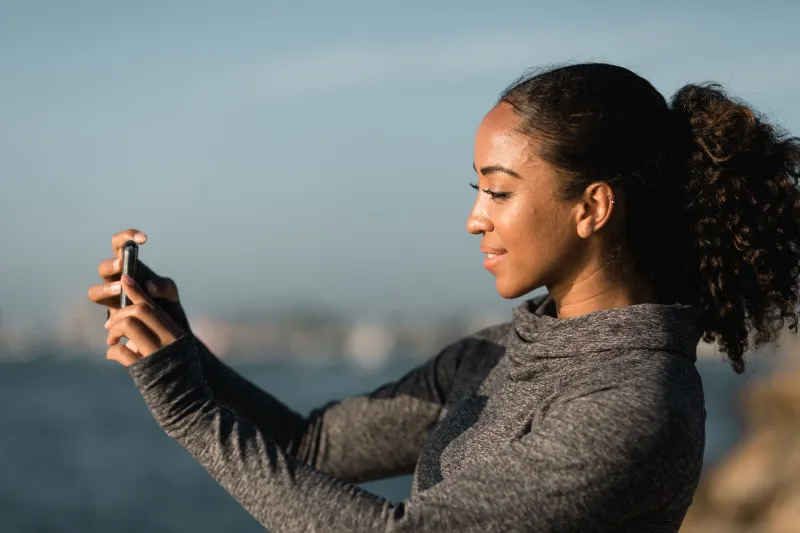
Let's be honest about what's happening here.
Your profile picture — on Facebook, LinkedIn, maybe even Slack if your job is the kind that cares — is a photograph taken during a different era of your life. Perhaps it was a wedding you attended. Perhaps it was a vacation. Perhaps it was just a random afternoon when the lighting was inexplicably perfect and you looked, against all odds and personal history, genuinely good.
That was 2019. It is not 2019. And yet there that photo sits, representing you to the world with the confidence of a vintage wine — getting more distinguished with age, or at least that's what you're telling yourself.
You are not alone. According to basically everyone who has ever existed online, the profile picture update is one of the most emotionally loaded, inexplicably stressful, and consistently avoided acts in all of digital life. Qoopie has decided it's time to understand why.
The Profile Picture as a Frozen Self
From a purely scientific standpoint, what you're doing when you refuse to update your profile picture is engaging in a behavior psychologists call self-concept preservation — the very human tendency to protect the version of yourself that you feel most comfortable presenting to the world.
Dr. Sherry Turkle of MIT, who has spent decades studying how humans relate to technology and digital identity, has written extensively about the way online avatars and profile images function as a kind of curated self — a "best possible version" that we project outward. The problem, of course, is that the best possible version was photographed on a specific day in a specific year, and time has continued moving without the photo's consent.
The profile picture, then, becomes a kind of anchor. It holds you to a past self that you're not necessarily ready to let go of — even if you intellectually understand that everyone can see you've aged, changed jobs, maybe grown a beard, definitely changed your hair at least three times.
The Anxiety Architecture of the Update
Here's where it gets genuinely funny, in a way that is also slightly tragic: the act of changing a profile picture carries its own unique social weight that has nothing to do with the photo itself.
On Facebook especially — where the profile picture update generates a notification, a small celebration, a prompt for friends to "like" your new look — changing your photo is a public announcement. It says: I have decided to represent myself differently now. Please weigh in. And for a lot of people, that invitation for feedback, even positive feedback, is terrifying enough to simply never do it.
This is what researchers sometimes call "audience anxiety" in digital contexts — the awareness that your online actions are observed and evaluated, which creates a kind of paralysis around anything that feels like a formal presentation of self. A new profile picture is, functionally, a press release about your face. And press releases are stressful.
"The stakes feel weirdly high," one person described it in a thread on the topic that Qoopie's editorial team spent an embarrassing amount of time reading. "Like, if I post a new profile picture and nobody likes it, does that mean nobody likes me? I know that's irrational. I'm keeping the 2019 photo."
The Specific Horrors of the 'New Profile Picture Energy'
There is a particular cultural phenomenon that deserves its own paragraph, and that is what we're calling New Profile Picture Energy — the vaguely performative, slightly vulnerable aura that surrounds someone who has just updated their photo.
You know the feeling. You see the notification. You click. You look at the new photo. You decide, in the span of about three seconds, what this photo says about them, whether they look good, whether they seem happy, whether this photo was taken recently or is also from 2019 but a different part of 2019. You like it or you don't. You leave a comment or you don't.
Now imagine being on the other side of that. Imagine knowing that dozens of people are currently making these micro-assessments of your new photo while you sit at home refreshing your notifications like a nervous wreck. This is why people don't update their profile pictures. It is simply easier to let the 2019 version handle it.
What the Science Actually Says (It's Interesting, We Promise)
Researchers studying digital self-presentation have found something genuinely fascinating: the photos people choose as profile pictures tend to cluster around emotionally significant periods rather than simply "most recent" or "most flattering." People choose photos from weddings, graduations, trips, and meaningful social occasions — not because they looked their best, necessarily, but because those moments felt like a version of themselves they wanted to hold onto.
This connects to broader psychological research on how we construct our personal narratives. We don't experience our lives as a continuous stream — we experience them as a series of meaningful moments, and we use objects, photos, and mementos to anchor ourselves to those moments. A profile picture from 2019 might not just be laziness. It might be a small, quiet insistence that the person you were at that wedding, on that vacation, in that inexplicably perfect lighting, is still fundamentally you.
That's either very touching or a clinically fascinating form of denial. Possibly both.
The LinkedIn Exception (and Why It's Different)
It's worth noting that LinkedIn operates by slightly different psychological rules. The professional networking context creates a separate kind of pressure — one where being too outdated feels like a credibility issue rather than just a personal quirk. People update LinkedIn photos with more frequency, and with considerably more anxiety about looking "professional" versus "approachable" versus "like someone who owns a boat they didn't earn."
This distinction actually supports the broader psychological point: profile picture behavior is entirely context-dependent. The stakes are different on different platforms, and the self you're presenting shifts accordingly. Your Facebook profile picture is about your social self. Your LinkedIn photo is about your professional self. Your Discord avatar is about your true self, and we will not be elaborating on that.
So Should You Update It?
Here at Qoopie, we believe in personal autonomy and also in not making unnecessary decisions that cause stress. So our answer is: probably yes, eventually, when you feel like it, no rush.
The 2019 photo has served you well. It has represented you at countless professional connections, family check-ins, and mildly awkward Facebook birthday greetings. It has been liked, commented on, and seen by hundreds of people who have continued to love you despite knowing that time has, in fact, passed.
But when the right photo comes along — the one where the lighting is just so, where you look like yourself but the good version of yourself, where you feel like that's the one — you'll know.
And then you'll wait another three months before actually posting it. Because the notification anxiety is real, and we respect that completely.